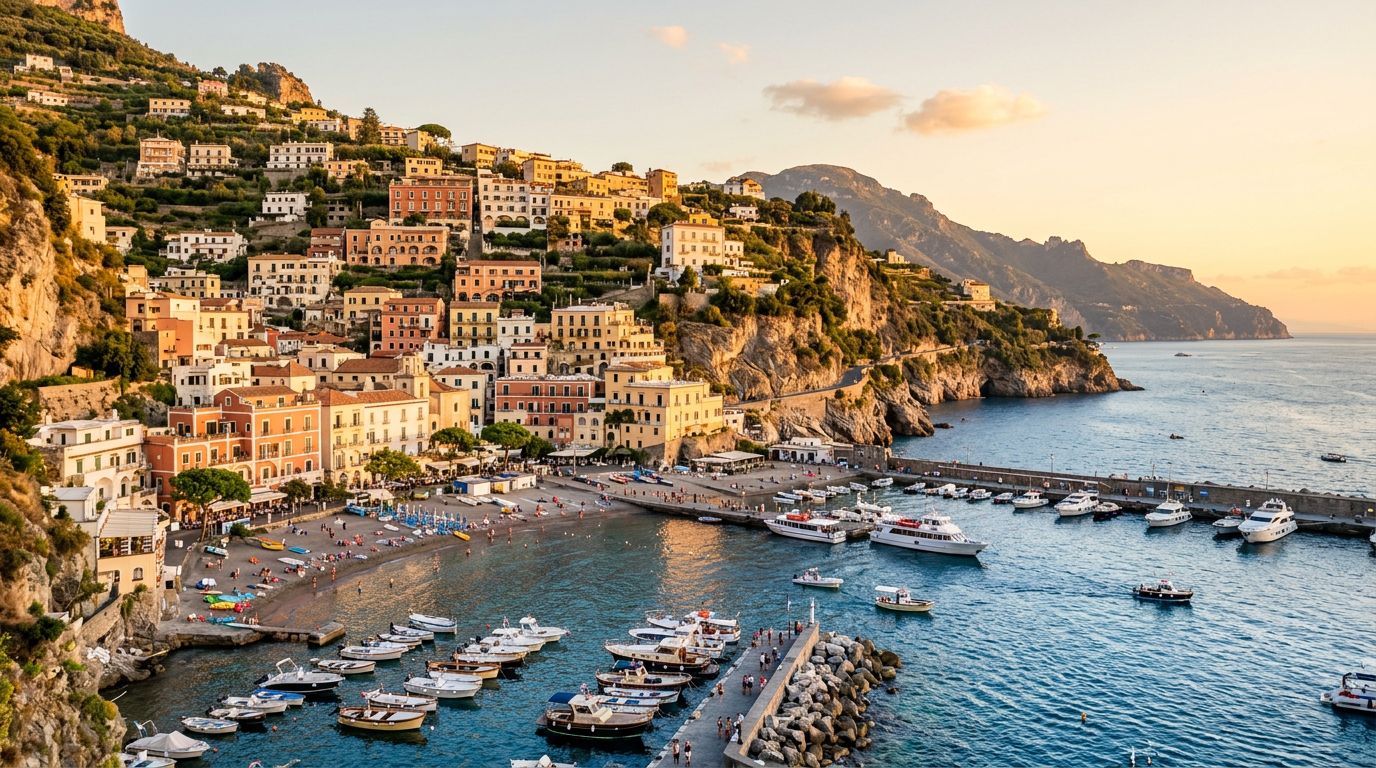
The Amalfi Coast spans fifty kilometers of vertical coastline where every service costs more than inland Campania. Your total spend depends on accommodation tier, transportation choices, and whether you visit in August or November. This guide breaks down realistic daily budgets and the line items that define them.
Quick answer
The average cost of trip to Amalfi Coast ranges from €120 to €350 per person per day, depending on accommodation standard and season. Budget travelers staying in agriturismi or pensioni and using public buses spend €120–180 daily. Mid-range visitors in three-star hotels with occasional private boat transfers spend €200–280. Luxury travelers in clifftop hotels with car service and fine dining exceed €350. These figures exclude flights to Naples but include lodging, meals, local transport, and activities.
The Amalfi Coast carries no entrance fee—it is a fifty-kilometer stretch of public coastline in the Province of Salerno—but nearly every service within it costs thirty to fifty percent more than equivalent offerings in Naples or Sorrento. The premium reflects geography: vertical cliffs leave little flat land for development, imported goods arrive by narrow road or boat, and seasonal demand compresses into five summer months. Accommodation drives the average cost of trip to Amalfi Coast more than any other factor. A bed in Positano's clifftop hotels starts at €280 in peak season; the same standard room in Praiano or Atrani costs €180. Budget pensioni in Amalfi town and Maiori offer doubles from €90, though August availability disappears by March. Agriturismi in the hills above Ravello provide the coast's lowest rates—€70 to €100—with the tradeoff of daily bus connections to the waterfront. Peak pricing runs June through September; shoulder months of April, May, and October deliver the same views at twenty to thirty percent less. Meals on the Costiera Amalfitana follow a similar gradient. A sit-down lunch of pasta, seafood, and wine costs €35–50 at harbor-facing restaurants in Positano or Amalfi, €25–35 in smaller villages, and €15–20 at family-run trattorias one street back from the water. Breakfast is often included with lodging; when it is not, a cornetto and cappuccino at a bar runs €4. Dinner at Michelin-recognized restaurants in Ravello or Furore starts at €120 per person; neighborhood pizzerias serve Neapolitan pies for €10–14. Transportation within the region splits between SITA buses—€2 per ride, €10 for a day pass—and private options. Water taxis between towns cost €15–30 per person; full-day boat charters to Capri or the Grotta dello Smeraldo run €150–250 for small groups. Renting a scooter costs €40–60 daily, though the SS163 coastal road requires confident handling of hairpin turns and summer traffic. Most visitors combine bus travel for practical transfers with one or two splurge boat trips for access to coves and swimming spots unreachable by road. Activities and entrance fees remain modest. The region itself is a public destination; hiking the Sentiero degli Dei and visiting Amalfi's cathedral cloister (€3) or Ravello's Villa Rufolo gardens (€7) cost little. Guided boat tours, cooking classes, and wine tastings in hillside vineyards each add €50–90 to daily spending. The total cost of a trip to Amalfi Coast ultimately reflects how often you choose the premium version of each decision—clifftop versus hillside, restaurant versus pizzeria, taxi versus bus—across three to seven days on the coast.
“The Amalfi Coast carries no entrance fee, but nearly every service within it costs thirty to fifty percent more than equivalent offerings in Naples or Sorrento.”
The cost of an Amalfi Coast trip varies significantly based on accommodation choices and travel style. Planning for daily expenditures helps manage overall trip expenses effectively.
How to spend less
Verdict: Travelers should expect to spend between 150 EUR and 400 EUR per person daily, depending on comfort preferences and accommodation choices.
The Amalfi Coast is located in the Province of Salerno, Campania, Italy. Most travelers reach the region via Naples before utilizing local transport networks to navigate the coastal towns.
Circumvesuviana line from Napoli Garibaldi to Sorrento
SITA Sud bus from Sorrento to Positano/Amalfi
Ferry from Naples or Salerno to Amalfi/Positano
Private transfer from Naples Airport/Station
The best arrival window is 08:00–10:00 to avoid peak daytime tour bus crowds and ensure cooler temperatures. There is no gate or entrance fee to access the region.
The best arrival window to the Amalfi Coast is 08:00–10:00 to avoid peak daytime tour bus crowds and manage logistical congestion. Visiting during the shoulder seasons offers a balance between moderate costs and favorable conditions.
Hot and humid, 28–30°C
Prices for lodging and services reach their annual maximum during these months.
Mild and pleasant, 18–25°C
This period offers a balance of accessible pricing and favorable weather conditions.
Cool, 10–15°C
Many services operate on limited schedules, but accommodation costs are at their lowest.
—
Arriving between 08:00–10:00 avoids peak daytime tour bus crowds and ensures cooler temperatures.
Verdict: For the most balanced experience, visit during the shoulder months of April or October, and plan to arrive at your destination between 08:00–10:00.
Complete these tasks before departure to lock in lower rates and avoid on-the-ground price inflation.
Everything you need to know about average cost of trip to amalfi coast
The average cost of trip to amalfi coast varies significantly based on your travel style, accommodation choices, and dining preferences. Visitors should factor in regional transportation, meals, and activities when planning their overall expenditure.
There is no entrance fee required to visit the Amalfi Coast, as it is a public destination without gates or admission costs. You can access the towns and scenic routes freely throughout the year.
The best arrival window is between 08:00 and 10:00 to avoid peak daytime tour bus crowds and enjoy cooler temperatures. Arriving early also allows you to secure better seats on regional ferries and buses.
Prices for lodging and transport fluctuate throughout the year, with peak summer months generally being more expensive than the shoulder seasons. Monitoring these variations helps in managing the average cost of trip to amalfi coast effectively.
A typical budget includes expenses for local ferries, dining at trattorias, and regional land transport like buses or private transfers. Planning ahead for these logistical necessities helps provide a clearer picture of your financial requirements.
Yes, you can manage costs by utilizing public ferry networks and local bus services rather than relying on private excursions. Opting for casual dining spots rather than fine dining restaurants also significantly reduces daily spending.
Solo travelers can optimize the average cost of trip to amalfi coast by choosing smaller guesthouses and utilizing shared transit options. Being flexible with travel dates and booking transport in advance often yields better pricing.
A common mistake is failing to account for high-season price surges in transport and dining. Travelers often overlook the savings possible by visiting outside of peak midday hours and utilizing public maritime routes.
Amalfi Coast Boat Tours from Salerno
Read more Tickets & toursPrivate Amalfi Coast Boat Tours
Read more GuideIs the Amalfi Coast Worth Visiting?
Read more Tickets & toursAmalfi Coast Boat Tours from Sorrento
Read more Tickets & toursAmalfi Coast Boat Tours from Positano
Read more Tickets & toursAmalfi Coast Boat Tours from Amalfi
Read more GuideHow Many Days Do You Need in the Amalfi Coast?
Read more Tickets & toursAmalfi Coast Boat Tours from Naples
Read more